
READ — ABOUT 7 MINUTES
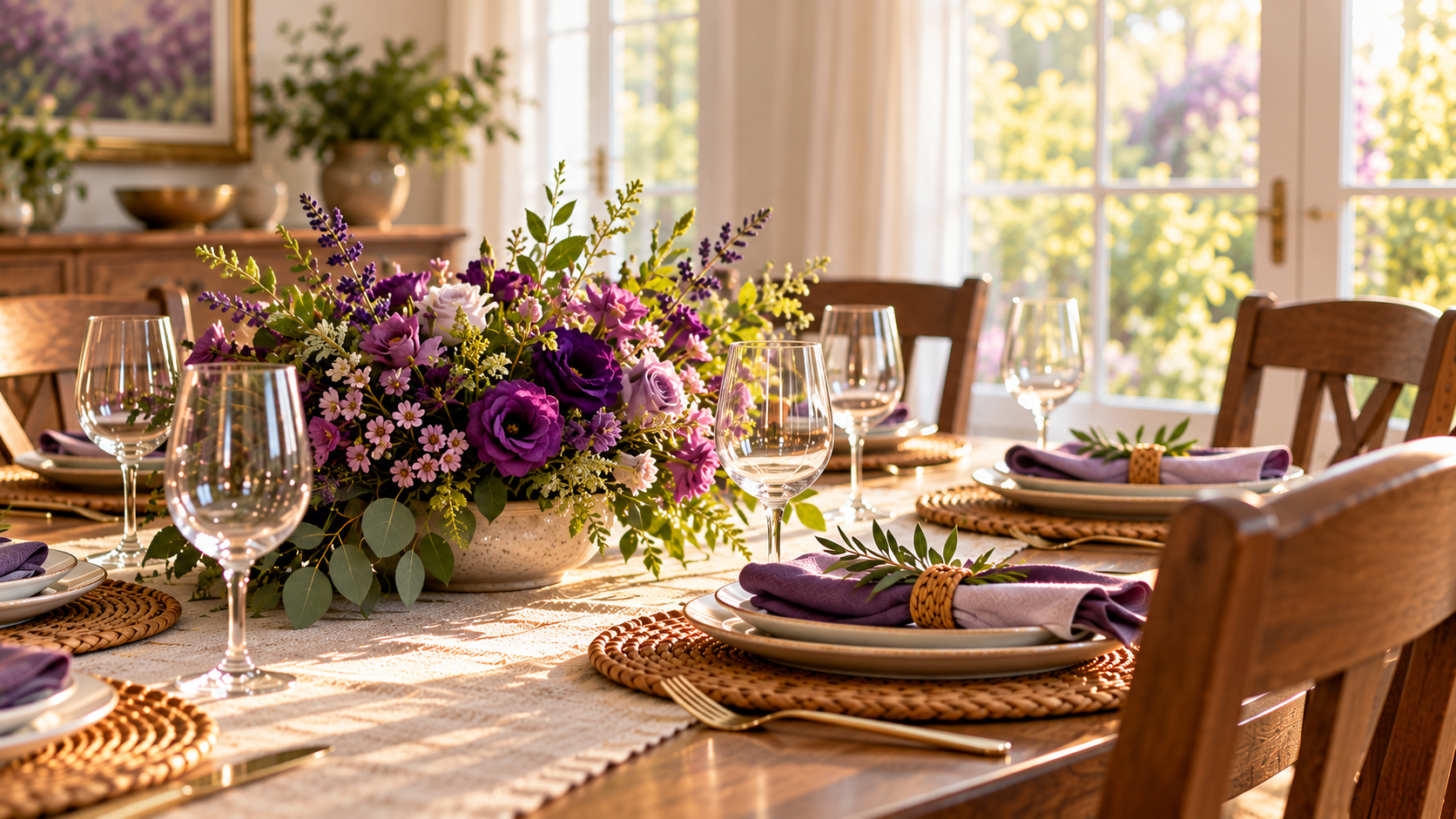
Thanksgiving begins long before anyone sits down at the table.
We plan the menu.
We decide who to invite.
We arrange the seating.
We shop for groceries, pull out recipes, make travel plans, prepare the house, and decide who will bring what.
Some of us will use dishes that come out only for special occasions. Some will prepare a recipe that has appeared on the Thanksgiving table for decades. Someone may ask whether we really need that much food. Someone else may insist that Thanksgiving would not be Thanksgiving without one particular dish.
And woven through all that preparation are people.
People we love.
People who challenge us.
People we wish could be there.
People whose presence may require a little extra grace.
Thanksgiving can contain both joy and difficulty.
But as we prepare for this one, perhaps there is something else worth considering:
We do not know how many more Thanksgivings we will have with the people who will gather around our tables this year.
That is not meant to make the holiday sad.
It is an invitation to become present before the day arrives.
Before we clear the table, perhaps we can decide to notice who is sitting around it.
What Is Already Here?
Sometimes gratitude begins with looking again.
Not pretending.
Not calling something good when it was painful.
Not comparing our lives with someone else’s and deciding we should be grateful because things could be worse.
Simply looking again.
Last month, during my October reflections, I spent time considering gratitude in When Gratitude Becomes Personal and what it means to recognize what is present in our lives.
As Thanksgiving approaches, I want to return to that idea.
Because gratitude can become strangely general.
I am thankful for my family.
I am thankful for my health.
I am thankful for my life.
All of those things are true.
But sometimes the general answer allows us to move past the particular gift.
Who, specifically, has loved you well?
What can your body still do today that you rarely notice?
What happened this year that you once prayed would happen?
What ordinary provision has become so familiar that you no longer see it as provision?
What did someone do for you that she did not have to do?
Perhaps gratitude becomes richer when we give it a name.
Gratitude Does Not Require Denial
Thanksgiving can be complicated.
There may be an empty chair at the table.
There may be someone sitting in a chair whom you find difficult to love.
There may be a family relationship that does not resemble the holiday advertisements.
There may be financial strain, illness, disappointment, loneliness, uncertainty, or grief.
Gratitude does not require us to erase any of that.
Scripture does not tell us that everything is good.
It tells us:
“Give thanks in all circumstances; for this is God’s will for you in Christ Jesus.”
There is an important difference between giving thanks for everything and finding something for which we can give thanks within what is happening.
Sometimes gratitude and grief occupy the same room.
We can miss someone and be grateful that we knew her.
We can be disappointed about what did not happen and grateful for what did.
We can acknowledge that a year was difficult without declaring that nothing good occurred within it.
That is not denial.
It is a fuller accounting.
And perhaps making that fuller accounting before Thanksgiving helps us arrive at the day differently.
What Happens When We Practice It?
Researchers continue to study what happens when people intentionally practice gratitude.
A large international study published in 2026 included 10,696 participants from 34 countries. Researchers tested six brief gratitude practices and compared them with control activities.
On average, the gratitude practices increased positive feelings and produced improvements in optimism and life satisfaction. They also reduced some negative feelings, although the effects differed depending on the gratitude practice and the country in which participants lived.
That last part is important.
Gratitude is not magic.
Writing three things in a notebook does not guarantee happiness.
It does not cure grief.
It does not resolve an unsafe relationship.
It does not eliminate financial difficulty.
And it should never become another way of telling someone who is hurting that she ought to feel better.
The research suggests something more modest and useful:
What we intentionally notice can influence how we experience our lives.
Perhaps that is enough reason to practice noticing.
Other People’s Thank-Yous
There is something unexpectedly moving about reading what other people are grateful for.
A project called The Gratitude Wall allows people to leave their own words of thanks and read what others have shared.
The entries do not have to be grand.
That is part of what makes the idea worthwhile.
One person’s gratitude may remind another person of something she has overlooked.
Not because their lives are the same.
But because gratitude can sharpen attention.
Someone else’s thank-you may cause us to look again at our own lives.
The Map
Perhaps your map contains both abundance and absence as you prepare for Thanksgiving.
Someone will be there.
Someone will be missing.
Someone you expected to see may have other plans this year.
A relationship may be easier than it was last Thanksgiving.
Another may be more complicated.
Something worked out.
Something did not.
A prayer was answered.
Another prayer still seems to be waiting.
You gained something.
You lost something.
You changed.
Someone you love changed.
Some things remain unresolved.
The map does not ask us to cover any of that with a cheerful holiday greeting.
It simply shows us what is.
And within what is, there may also be something worthy of thanks.
The Lantern
Sometime before Thanksgiving Day, take one piece of paper.
Not a gratitude journal.
Not a list of twenty-five things.
One piece of paper.
Write:
Today, I am thankful for ____________________.
Be specific.
Then underneath it write:
Why does this matter to me?
That second question is the practice.
“I am thankful for my sister” names a person.
“I am thankful that my sister calls me every Sunday, because hearing her voice reminds me that distance has not ended our closeness” names the gift.
“I am thankful for my home” is true.
“I am thankful for the chair near my window where I sit quietly in the morning” asks us to notice something more closely.
You do not have to show your answer to anyone.
But give yourself enough time to discover why what you named matters.
Then consider one more thing:
Is there someone who needs to hear your gratitude while she can still hear it?
Perhaps Thanksgiving does not have to be the day you finally say it.
Perhaps you can tell her now.
60 Seconds
For one minute, become quiet.
Do not make a list.
Think of one person, place, provision, ability, experience, or ordinary part of your life for which you are grateful.
Stay with that one thing.
Notice what changes when you give it your full attention.
If the gratitude comes with sadness, let both be present.
If it brings joy, let yourself experience the joy.
You do not have to turn the moment into anything else.
For sixty seconds, simply recognize:
This, too, is part of my life.
Before We Clear the Table
Soon we will gather.
Perhaps around a crowded table.
Perhaps with only one or two other people.
Perhaps somewhere other than home.
Perhaps not around a Thanksgiving table at all.
However the day looks, we have an opportunity before it arrives to decide how we want to enter it.
We can become so occupied with preparing the food, getting everyone where they need to be, remembering what we forgot at the grocery store, and making the day go well that we miss the people for whom we were preparing it.
So perhaps, among the menu planning and the grocery lists, we can make another kind of preparation.
We can decide to pay attention.
To listen to the story we have heard before.
To notice the hands that prepared something.
To say thank you while the person can still hear us.
To recognize that something does not have to be permanent to be precious.
We do not know how many more Thanksgivings we will share with the particular collection of people who make up our lives today.
That need not frighten us.
Perhaps it can simply remind us:
Do not wait until the table is empty to recognize who was sitting there.
Reflection
As you prepare for Thanksgiving, who or what do you want to make sure you truly notice while it is still here?
The map shows me what is. The lantern guides what I choose next.
Sources
Nicholas A. Coles and colleagues, “A Multinational Megastudy of the Effects of Gratitude Practices on Subjective Well-Being”, Proceedings of the National Academy of Sciences, 123(20), e2537789123 (2026).
The Gratitude Wall — a public project where people can share and read expressions of gratitude.
Leave a Reply